
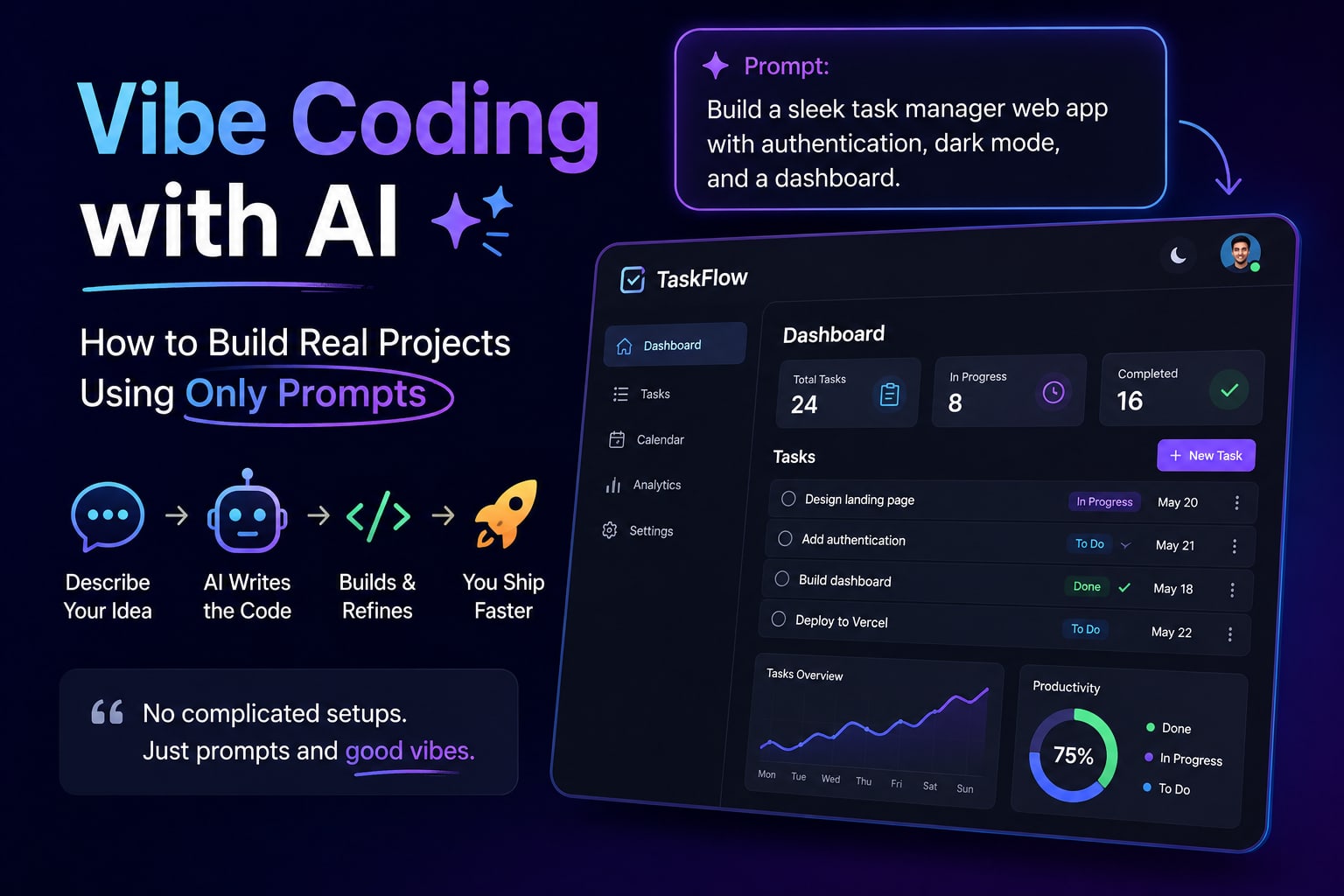
What Is Vibe Coding?
Andrej Karpathy coined the term "vibe coding" to describe a new mode of programming where you describe what you want in natural language, accept the AI's code largely without reading it, and iterate based on whether the output works. It is a real phenomenon, and it is genuinely useful — but it requires the right mental model to avoid disaster.
Vibe coding is not "AI writes code and you do nothing". It is "AI writes 80% of the code and you direct, review, and correct the remaining 20% that matters". The skill shifts from typing code to having taste about what good code looks like.
The Effective Vibe Coding Workflow
Where Vibe Coding Breaks Down
Security is the biggest blind spot. AI-generated code is often syntactically correct but contains classic vulnerabilities — missing authorization checks, SQL injection through raw queries, XSS through unescaped output. If you are building anything that handles user data or money, you must read the security-sensitive code yourself.
The second failure mode is architecture rot. AI will happily write inconsistent code that does not follow the patterns you established earlier. Without human oversight, a vibe-coded codebase becomes unmaintainable in weeks.
The Skills That Still Matter
Reading code is more important than ever — even if you are not writing it yourself. Understanding what a function does, spotting a missing auth check, recognizing a N+1 query — these are skills no amount of prompting replaces. Vibe coding accelerates developers who have fundamentals. It produces broken, insecure messes for those who do not.